
SLAP Tear or Rotator Cuff Injury? How to Tell the Difference
October 27, 2026Categories: Orthopedics, Shoulder Pain
Ouch! You lift your arm and feel a painful pop or crackle in your shoulder joint. It’s hard to reach that high shelf. When you do reach what you’re after, you have trouble supporting its weight.
What could have gone wrong?
Your symptoms could have several causes, says Dr. Cory Messerschmidt, a board-certified, fellowship-trained orthopedic surgeon and sports medicine specialist at Beaufort Memorial Orthopaedic Specialists.
Two possibilities are a SLAP tear or a rotator cuff injury.
“Weakness, trouble lifting your arm overhead and noise in your joint would generally indicate a SLAP or rotator cuff tear,” he says. “There are some differences in symptoms, so speaking to an orthopedic specialist about your pain is your best course of action.”
What Is a SLAP Tear?
Picture your shoulder as a ball-and-socket joint. The ball is the rounded top part of your humerus, or upper arm bone. The socket, or glenoid, is located on the upper/outer edge of your shoulder blade. A rim of tissue called the glenoid labrum runs around the outside of the glenoid to stabilize the joint.
A SLAP (superior labrum, anterior and posterior) tear or lesion occurs when the top part of your labrum has been torn.
SLAP Tear Categories
Medical providers categorize SLAP tears into different types based on what the tear looks like and how severe it is:
- Type I: The cartilage is frayed or worn down over time, usually from normal wear and tear as you age.
- Type II: The cartilage and biceps tendon pull away from the shoulder socket. This is the most common type.
- Type III: A loose flap of torn cartilage hangs inside the shoulder joint, but the biceps tendon stays attached.
- Type IV: The tear spreads from the cartilage directly into the biceps tendon.
- Types V-X: The tear spreads into nearby shoulder tissues or ligaments, which can make the joint feel loose or unstable.
Tears where the cartilage has detached or torn into the tendon may require surgery to trim or reattach the tissue.
Read More: Preventing Sports Injuries
What Is a Rotator Cuff Injury?
Your rotator cuff consists of four muscles that attach the head of your humerus securely to your glenoid. A tear in any of these muscles that connect your shoulder blade to your upper arm is a rotator cuff tear.
What Causes Shoulder Joint Tears?
SLAP tears and rotator cuff tears can result from injury or overuse.
Common SLAP Tear Causes
You can get a SLAP tear from catching yourself with an outstretched arm when you fall or from dislocating your shoulder. Jerking your arm, throwing something or yanking on a heavy object can also cause a SLAP tear.
Workers or athletes who reach overhead a lot may gradually develop SLAP tears over time. These injuries are more common in people aged 30 to 40 and older.
Common Causes of a Torn Rotator Cuff
Acute (sudden) rotator cuff tears often result from falls. Suddenly lifting a heavy object, as in weight-lifting, can also cause a rotator cuff tear.
Like SLAP tears, rotator cuff tears affect people whose jobs or sports involve repeated lifting or overhead work. Those aged 40 and older are more likely to have a rotator cuff tear.
How Do the Symptoms Differ?
Your symptoms can hint at whether you have a SLAP lesion or a rotator cuff tear. With both injuries, though, you may experience similar issues.
“SLAP tears and rotator cuff injuries both hinder what you can do with your shoulder,” Dr. Messerschmidt says. “I start with in-office tests to find out exactly where your range of motion is painful or limited.”
SLAP tear symptoms include:
- Catching or popping
- Pain with lifting, overhead movements or holding the arm steady
- Reduced range of motion
- Weakness
Rotator cuff tear symptoms include:
- Crackling noises
- Difficulty lifting or rotating your arm
- Painful range of motion
- Soreness at rest or when lying on your arm
However, some people do not experience pain with a rotator cuff tear.
How Do Providers Diagnose and Treat Shoulder Injuries?
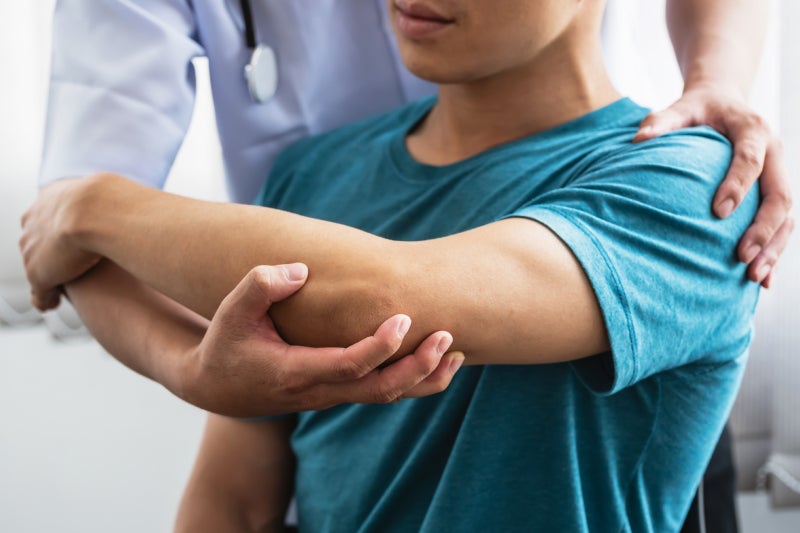
When you visit your healthcare provider for shoulder pain, they’ll ask about your pain and examine you physically. They may also give you in-office tests, such as asking you to move your arm while they provide resistance.
To get a clearer idea of what’s going on, your provider may refer you for imaging, such as an ultrasound or MRI. An X-ray can help rule out a broken bone.
Arthroscopic Repair
Typically, surgeons use arthroscopic surgery for SLAP or rotator cuff repair. In arthroscopic surgery, your surgeon uses tiny instruments through puncture-sized holes to trim frayed cartilage, reattach tendons or make other repairs.
You may also participate in physical therapy. Whether on its own or after surgery, PT can help you recover faster from your injury or procedure. You’ll also learn how to move safely and effectively – a great way to protect against shoulder injuries in the future.
Will It Heal on Its Own? What Happens If You Wait?
Most of the time, rotator cuff and SLAP tears improve with physical therapy, accompanied by over-the-counter or prescription medications or pain-relieving injections. Recovery with PT can take about 3 to 6 months for a SLAP tear, for example, and roughly 6 to 12 weeks for a rotator cuff tear.
However, it’s important not to DIY your recovery. Without medical attention, rotator cuff and SLAP tears can lead to ongoing pain, weakness and degenerative changes — think arthritis — in the joint. An orthopedic specialist or sports medicine doctor can guide you as you build strength and stability to return to your active life.
Read More: Give Shoulder Pain the Cold Shoulder
The Bottom Line for Peace of Mind
You shouldn’t have to worry about what your shoulder pain means or whether it’s here to stay. Simple in-office tests and imaging studies can point to the answers you need.
- If you’re feeling pain, weakness and reduced range of motion in your shoulder, you could have a SLAP tear or torn rotator cuff.
- Though these injuries sometimes heal on their own, they often get worse without treatment.
- Talk with your provider about shoulder pain. It’s the first step to preserving your range of motion, preventing future problems and protecting your ability to do your sport or job.
Whether you have a SLAP tear, rotator cuff injury or another condition, Beaufort Memorial orthopedic specialists can identify the cause of your pain and develop a treatment plan to help restore movement and get you back to the activities you enjoy.
Request an appointment with an orthopedic provider today.
Featured Medical Expert

Cory A. Messerschmidt, M.D., FAAOS
Orthopedic Surgery +1 more
Accepting new patients
Related Providers

Cory A. Messerschmidt, M.D., FAAOS
Orthopedic Surgery +1 more
Accepting new patients
Beaufort Memorial Orthopaedic Specialists - Port Royal
1680 Ribaut Road
•
Port Royal,
SC
29935