
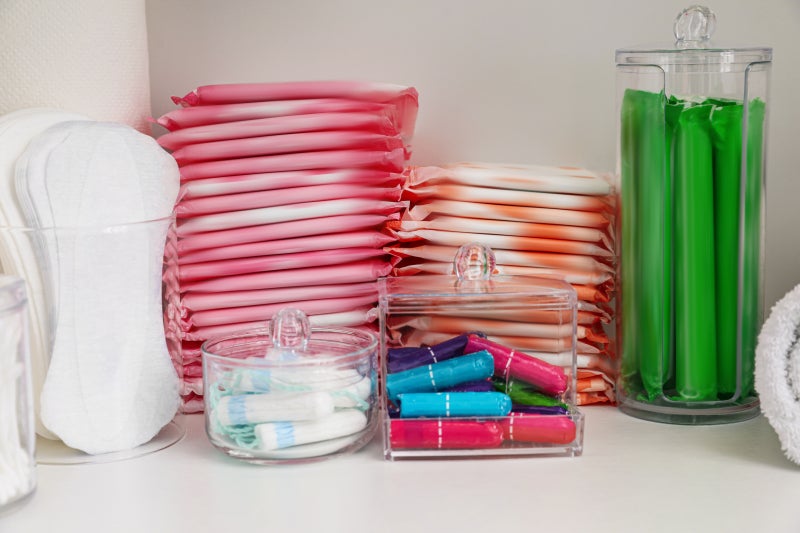
Scrolling through social media, it can feel like everyone has become a women’s health expert overnight. Bloggers, influencers and our favorite celebrities warn us about “toxic” period products while promoting alternatives to traditional options.
This heavy flow of information can be misleading, and with so much information online, it’s easy to be overwhelmed.
“There’s no one-size-fits-all solution to period care,” said Dr. Tempest Allen, a board-certified OBGYN at Beaufort Memorial Obstetrics & Gynecology Specialists. “Understanding your options and building a relationship with your women’s healthcare provider can help you make informed decisions about which menstrual products are best for you.”
Understanding Traditional Period Products: Pads and Tampons
For decades, pads and tampons have been the most widely used menstrual products, and they remain the trusted choice for many.
Pads, also known as sanitary napkins, are worn externally and stick to underwear with adhesive to absorb menstrual flow. They come in a variety of sizes and absorbency levels and should be changed every few hours to maintain hygiene and prevent irritation.
Tampons are inserted into the vagina using an applicator or finger. Like pads, they are available in various sizes and absorbencies and should typically be changed every four to eight hours.
A recent report from Harvard University noted that pads and tampons are still the most used period products, with many women choosing to use a combination of both throughout their cycle.
Read More: Spotting Between Periods? Learn Common Causes and What to Do
Exploring Alternative and Sustainable Period Products
In recent years, younger generations – including millennials and Gen Z – have increasingly turned to alternative menstrual products that are reusable or produce less waste.
Menstrual Cups
Menstrual cups are flexible, reusable devices inserted into the vagina to collect menstrual flow. They can hold more fluid than tampons and may be worn for up to 8 to 12 hours, depending on flow.
Menstrual cups should be sterilized by boiling in water for five to 10 minutes at the beginning and end of each cycle. With proper care, they can last for several years.
Menstrual Discs
Menstrual discs function similarly to cups, but sit higher in the vaginal canal, near the base of the cervix. They can typically be worn for up to 12 hours and also require proper cleaning and sterilization.
Period Underwear and Reusable Pads
External alternatives like period underwear and cloth pads are made with absorbent, leak-resistant materials. These products can often be worn for up to 12 hours, depending on flow, and then washed and reused.
Cleaning instructions vary by product and brand, so it’s important to follow manufacturer guidelines to ensure proper hygiene and longevity.
How to Choose the Best Period Product for You
There’s no “right” or “wrong” menstrual product, only what works best for your body, lifestyle and preferences.
For example:
- Individuals with active lifestyle or athletes may prefer internal options like tampons, cups or discs for comfort and mobility.
- Those seeking convenience may choose disposable pads or tampons.
- Environmentally conscious users may opt for reusable or lower-waste products.
“The most important thing is that the chosen products are used and replaced at appropriate intervals,” Dr. Allen said. “If you don’t know where to start, a women’s healthcare provider can help guide your decision based on your health history and needs.”
Read More: Heavy Menstrual Bleeding: Solutions for an Often-Silent Problem
What to Know about Ingredients and Safety
One topic gaining lots of attention online is the presence of PFAS, sometimes called “forever chemicals,” in certain menstrual products. While some studies have detected these substances, research into their prevalence and long-term health effects is still ongoing.
Similarly, products labeled “organic” or “natural” are often marketed as safer alternatives. However, there is currently no definitive evidence showing that these options are inherently safer than conventional menstrual products.
If reducing exposure to additives or microplastics is a priority for you, consider:
- Choosing products with simple, transparent ingredient lists
- Avoiding added fragrances or unnecessary chemicals
A good rule of thumb: simpler products are often a reliable place to start.
Read More: Tired of Period Bloating? Here's How to Manage It
When to Talk to a Healthcare Provider
If you experience discomfort, irritation, unusually heavy periods or have questions about menstrual products, it’s important to consult a qualified provider.
“Period care isn’t about following trends or celebrities, but about finding what works for you and your body,” Dr. Allen said. “Research continues to evolve, so stay informed, practice good hygiene and don’t hesitate to seek medical advice when needed.”
Is it time for your annual well-woman visit? Request an appointment with a Beaufort Memorial women’s health provider.
Featured Medical Expert

Tempest Allen, M.D., FACOG
Obstetrics & Gynecology
Offers virtual visits
Related Providers

Tempest Allen, M.D., FACOG
Obstetrics & Gynecology
Offers virtual visits
Beaufort Memorial Obstetrics and Gynecology Specialists
989 Ribaut Road
Suite 210, Beaufort Medical Plaza
•
Beaufort,
SC
29902