
Juvenile Idiopathic Arthritis: When It’s More Than Growing Pains
July 21, 2026Categories: Arthritis, Pediatrics
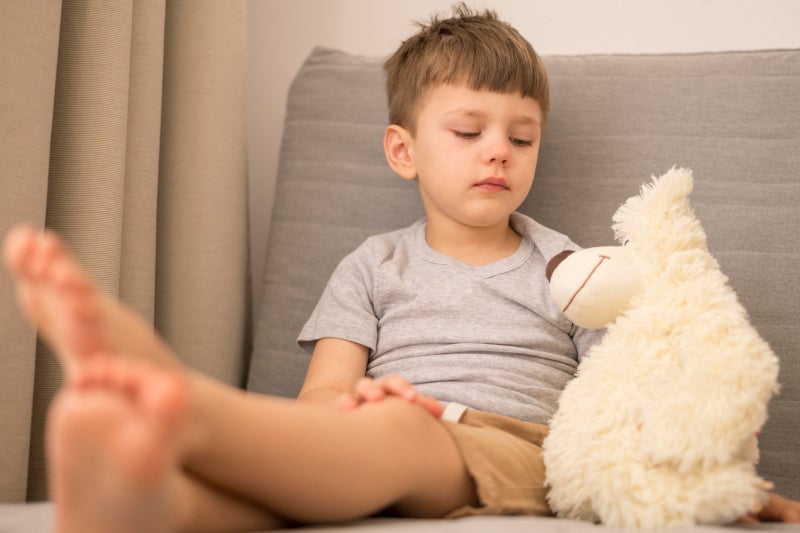
If your child is diagnosed with juvenile idiopathic arthritis (JIA), it’s normal to feel overwhelmed.
While this journey can bring challenges, your child’s pediatric care team stays with you every step of the way with treatment, education and compassion that empowers you to take the next step forward.
Look below to learn more about this condition and how proper treatment can improve your child’s quality of life.
What Is Juvenile Idiopathic Arthritis?
Three important terms can help you understand juvenile idiopathic arthritis.
- Juvenile indicates childhood or youth. JIA sets in before the age of 16 and can develop as early as six months of age.
- Idiopathic means there is no known cause. To date, it’s unclear why some children experience this disease.
- Arthritis is joint inflammation. It can occur in any joint and causes pain, swelling and other unwanted symptoms.
According to the Pediatric Orthopaedic Society of North America, JIA is the most common chronic rheumatologic disorder experienced during childhood.
“With juvenile idiopathic arthritis, the immune system mistakenly attacks healthy joint tissues and cells,” explains Dr. Cory Messerschmidt, a board-certified, fellowship-trained orthopedic surgeon and sports medicine specialist with Beaufort Memorial Orthopaedic Specialists. “The body then releases chemicals that inflame the attacked area. This inflammation causes pain, tenderness and other symptoms.”
Adults with rheumatoid arthritis have the same experience. As a result, JIA was called juvenile rheumatoid arthritis for years. The name change came when researchers confirmed “it is not a kid version of the adult disease,” according to the Arthritis Foundation.
“While both cause joint pain and inflammation,” Dr. Messerschmidt says, “Juvenile idiopathic arthritis only affects children, and it isn’t a single condition.”
Read More: Comparing Common Types of Arthritis
Types of Juvenile Idiopathic Arthritis
Often, symptoms depend on the type of arthritis.
- Enthesitis-related juvenile idiopathic arthritis affects the hips, knees, heels, feet and spine.
- Oligoarticular juvenile idiopathic arthritis affects the knees, ankles and eyes.
- Polyarticular juvenile idiopathic arthritis–rheumatoid factor negative affects five or more joints.
- Polyarticular juvenile idiopathic arthritis-rheumatoid factor positive affects at least five different joints.
- Psoriatic juvenile idiopathic arthritis affects various joints and the skin.
- Systemic juvenile idiopathic arthritis affects any joint, organ or other body part.
Is Juvenile Idiopathic Arthritis Serious?
Juvenile idiopathic arthritis is a serious condition that can lead to complications, such as:
- Different leg lengths
- Growth delays
- Stiff and tight joints
- Weak bones
Systemic onset of this type of arthritis can also affect organs and other parts of the body. This can cause significant problems or even be fatal.
“With any type of juvenile idiopathic arthritis, early diagnosis is key,” Dr. Messerschmidt says. “New treatment options help kids maintain joint health and function, and they’re most effective when started early.”
Signs and Symptoms: Growing Pains Vs. JIA
“Detecting juvenile idiopathic arthritis can be tricky, as you may think your child has growing pains,” Dr. Messerschmidt says. “However, there are some key differences between growing pains and JIA.”
Typically, growing pains:
- Affect the legs (the whole legs, not just the joints)
- Aren’t accompanied by other symptoms
- Feel worse late in the day or at night
- Occur a couple of times a week for a month or two
On the other hand, juvenile idiopathic arthritis normally:
- Affects only joints in various parts of the body
- Are accompanied by other symptoms, such as a change in finger or toe nails, frequent fevers and a pink rash that comes and goes
- Feels worse in the morning
- Occurs almost every day for at least six weeks
What Triggers Juvenile Idiopathic Arthritis?
While the exact cause of juvenile idiopathic arthritis remains unknown, environmental and genetic factors are likely involved. Risk factors include:
- Antibiotic exposure
- Being an identical twin
- C-section birth
How Doctors Diagnose and Treat Juvenile Idiopathic Arthritis
Unfortunately, there’s no one specific test to detect juvenile idiopathic arthritis.
Tests to help rule out other conditions and confirm a diagnosis include:
- Examination — Your child’s healthcare provider will ask about your child’s symptoms and health history. Additionally, the provider will evaluate your child’s skin, joints, mobility, movement and other areas of concern.
- Imaging exams — Your child’s provider may prescribe an MRI, ultrasound or X-ray exam. These can show bone fractures, tumors, joint inflammation and more.
- Laboratory tests — C-reactive protein tests help measure inflammation in your body. Antinuclear antibody (ANA) and rheumatoid factor (RF) tests look for antibodies and proteins that attack healthy cells.
Once diagnosed, the American College of Rheumatology recommends early, aggressive treatment to maximize quality of life and preserve joint function.
Treatment of juvenile idiopathic arthritis is determined on a case-by-case basis. It often involves occupational therapy, physical therapy and medication, such as the following:
- Biologics — By targeting the part of the immune system that causes inflammation, biologic drugs reduce inflammation.
- Disease-modifying antirheumatic drugs —This reduces inflammation by lowering your immune system’s response. One form, methotrexate, is often the first medication prescribed and helps when multiple joints are affected.
- Nonsteroidal anti-inflammatory drugs (NSAIDs) — Ibuprofen or other NSAIDs can help manage inflammation and pain. These may be the only treatment needed when arthritis affects only a few joints.
- Steroid injections — These help reduce pain and swelling and can be repeated if the pain returns. Steroids can help if symptoms only affect a few joints.
When taking these medications, your child is carefully monitored for side effects. Potential side effects include stomach irritation, ulcers, weight gain and weakened bones. If your child develops any side effects, your care team may adjust your child’s treatment plan.
Read More: The Best Foods for Arthritis
Does Juvenile Idiopathic Arthritis Go Away?
Successful treatment of juvenile idiopathic arthritis and other rheumatic diseases can lead to symptom-free periods of remission. In some cases, something even better happens: the disease occasionally goes away forever, and the child doesn’t need medication or other treatment ever again. While most kids don’t outgrow their condition, proper treatment can reduce symptoms and prevent progression of the disease.
Read More: 9 Steps to Manage Arthritis Symptoms As You Age
In Conclusion: Helping Kids With Joint Issues
A diagnosis of juvenile idiopathic arthritis can be intimidating. Thanks to new advances, the condition can be managed, and your child can lead a normal life.
- This unique form of arthritis affects children younger than 16 years of age and has no known cause.
- Juvenile idiopathic arthritis can affect any joint in the body, and some forms affect body parts beyond the joints. All cause symptoms for six weeks or longer.
- Treatment usually includes occupational or physical therapy and medication. Early, aggressive treatment can lead to symptom remission.
Request an appointment with a Beaufort Memorial orthopedic specialist today.
Featured Medical Expert

Cory A. Messerschmidt, M.D., FAAOS
Orthopedic Surgery +1 more
Accepting new patients
Related Providers

Cory A. Messerschmidt, M.D., FAAOS
Orthopedic Surgery +1 more
Accepting new patients
Beaufort Memorial Orthopaedic Specialists - Port Royal
1680 Ribaut Road
•
Port Royal,
SC
29935