
Don’t Let Jumper’s Knee Take the Pep Out of Your Step
March 16, 2026Categories: Knee Pain, Orthopedics
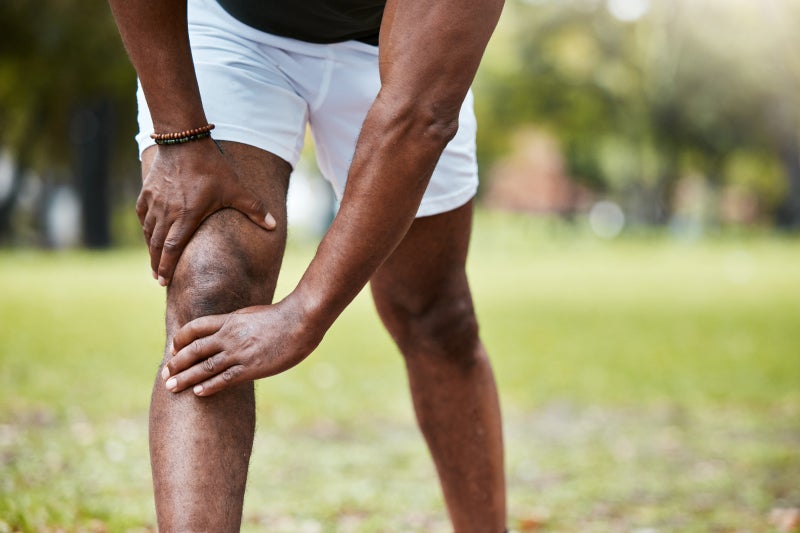
Do you have knee pain? If you do lots of jumping, your pain may be caused by patellar tendinopathy.
Also known as patellar tendinopathy or jumper’s knee, the condition can occur at any time, but your risk doubles after the age of 18, according to research published by the National Institutes of Health.
“You’re most likely to wind up with jumper’s knee if you’re an elite athlete, but it affects nonelite, recreational athletes as well, especially males,” says Dr. Cory A. Messerschmidt, a board-certified, fellowship-trained orthopedic surgeon at Beaufort Memorial Orthopedic Specialists, who sees patients in Okatie and Port Royal. “Its telltale sign is anterior knee pain, which is felt at the front, center area of the knee and can make it difficult or impossible to continue with activities you enjoy.”
What Is Jumper’s Knee?
Tendons are strong cords of tissue that help your joints function. They attach muscles to bones, helping stabilize your joints and keep all the parts in place. The patellar tendon connects your kneecap (patella) to the shinbone (tibia). There, it helps to straighten your knee.
Repeated use of this tendon over the years can cause small tears to develop. When this occurs, you may experience jumper’s knee.
Read More: Remedies for What's Ailing Your Knees
Common Causes of Jumper’s Knee
“Unlike bone fractures or other traumatic injuries, there is no collision that kickstarts jumper’s knee,” Dr. Messerschmidt says. “Rather, it’s an overuse injury that develops over time, as you use your knee.”
While it affects all types of athletes, patellar tendinopathy is most common among those who participate in sports that require frequent jumping and landing. Quick acceleration, deceleration and change of direction also increase your risk.
A few sports that lead to this painful knee condition include:
- Basketball
- Long-distance running
- Skiing
- Track (high jump or long jump)
- Volleyball
The tiny tears that cause pain can occur in a single exercise session or after repeated exercise sessions without enough time to recover.
Read More: Common Hip Pain Causes That May Surprise You
Symptoms of Jumper’s Knee
Jumper’s knee can be mistaken for several other conditions. However, the pain typically focuses on the front and bottom of your kneecap. It can be intense and typically starts when you apply weight to your injured knee. When you rest your knee, the pain may go away immediately. In rare cases or when the condition worsens, your pain may persist even when not actively using your knee.
Activities that may result in a flare-up of pain with jumper’s knee include:
- Climbing stairs
- Jumping
- Sitting for prolonged periods
- Squatting
Along with pain, you may notice swelling and tenderness around the patellar tendon.
Read More: What Causes Knee Pain Going Down Stairs?
Treating Patellar Tendinopathy
In the early stages, jumper’s knee causes pain following physical activity. As the condition progresses, your pain begins with activity and may start again when you begin to be fatigued. Without proper treatment, you may experience decreased performance, persistent pain and even a ruptured tendon.
Fortunately, treating the problem is often simple.
“Jumper’s knee rarely requires surgical intervention,” Dr. Messerschmidt says. “In fact, most cases resolve with some home care.”
Treating the Problem on Your Own
Treatment options to try at home include:
- Anti-inflammatory medication — Take over-the-counter nonsteroidal anti-inflammatory drugs (NSAIDs), such as aspirin or ibuprofen, for pain relief and reduced inflammation.
- Cold therapy — A few times a day, apply ice to the injured knee. This helps reduce swelling and manage pain.
- Elevate the injured knee — When possible, raise your knee above your heart level. By doing this, you reduce swelling by limiting the amount of blood that reaches your knee.
- Rest — An essential part of recovery is staying off your hurting knee. Adequate rest is necessary to give your injury time to heal fully.
Professional Help Recovering From Jumper’s Knee
If your pain continues, contact your primary care provider. An in-office evaluation and imaging test can confirm your diagnosis. Your provider may then recommend one of the following:
- Physical therapy — A physical therapist helps you perform exercises to strengthen and protect the patellar tendon from further harm.
- Platelet-rich plasma (PRP) injections — A healthcare provider draws some of your blood, and a laboratory technician separates it into its different parts. The platelets, which speed up the healing process, are then injected into your injured knee.
- Surgery — An orthopedic surgeon removes damaged tissue in the tendon or breaks up tissue that builds up excessively. This treatment is a last resort and is rarely necessary.
“Depending on the severity of your case, you may return to the field or court within a few weeks up to a year,” Dr. Messerschmidt says. “For the quickest recovery, reach out to your healthcare provider if the pain sticks around longer than a couple of weeks or makes it difficult to perform tasks of daily living.”
Read More: What Meniscus Tear Symptoms May Mean for Your Knee
The Quick Facts on Jumper’s Knee
Jumper’s knee can affect anyone, from elite athletes to weekend warriors. Recognizing the symptoms and taking appropriate steps can help you recover quickly and fully.
- Jumper’s knee occurs when you overuse the patellar tendon. It often affects those who play basketball, volleyball and other sports that involve jumping.
- The pain of patellar tendinopathy focuses on the lower front part of the knee and typically goes away with rest. You may also notice swelling and tenderness around the injured area.
- Home care, such as over-the-counter medications and cold therapy, often brings relief. For persistent pain, you may benefit from other treatments, ranging from physical therapy to surgery.
Request an appointment with one of our orthopedic sports medicine specialists.
Featured Medical Expert

Cory A. Messerschmidt, M.D., FAAOS
Orthopedic Surgery +1 more
Accepting new patients
Related Providers

Cory A. Messerschmidt, M.D., FAAOS
Orthopedic Surgery +1 more
Accepting new patients
Beaufort Memorial Orthopaedic Specialists - Port Royal
1680 Ribaut Road
•
Port Royal,
SC
29935