
Radiation Therapy Facts: Debunking Common Myths About Cancer Treatment
August 11, 2026Categories: Cancer Care, Cancer
Facing a cancer diagnosis means making important decisions about your treatment options. While the internet can be a valuable source of information, it can also expose you to misinformation and outdated advice, especially when it comes to radiation therapy.
Understanding the facts about radiation treatment for cancer can help you feel more confident about your care and the decisions you make alongside your oncology team.
“Radiation therapy is a widely used cancer treatment and can be very effective,” says Dr. Glenn Mieszkalski, a board-certified radiation oncologist who sees patients at both the Beaufort Memorial New River Cancer Center and the Beaufort Memorial Keyserling Cancer Center. “Unfortunately, there are many misconceptions about how radiation therapy works and what it does to the body. Understanding your treatment options can help you make informed decisions about your cancer care.”
Your radiation oncologist and nurse navigator can answer specific questions about your cancer diagnosis, treatment plan and what to expect during that treatment. In the meantime, let’s debunk several common radiation therapy myths and share the facts behind this effective cancer treatment.
Read More: Radiation 101: What to Expect During Radiation Treatment for Cancer
Radiation Therapy Basics: How Radiation Treatment Works
Radiation therapy is one of the most common and effective cancer treatment options available today. The American Cancer Society reports that more than half of all cancer patients receive radiation therapy as part of their overall treatment plan.
Radiation therapy works by using high-energy radiation to destroy cancer cells or stop them from growing and dividing. Because every cancer diagnosis is unique, your radiation treatment plan will depend on your type of cancer, the cancer location and stage.
There are three primary types of radiation therapy: external beam radiation therapy, internal radiation therapy and systemic radiation therapy.
External Beam Radiation Therapy
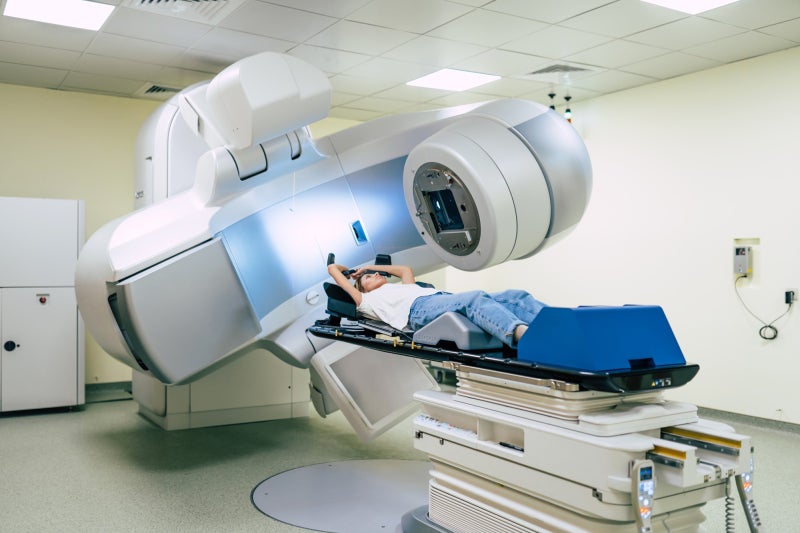
External beam radiation therapy is the most common type of radiation treatment. During treatment, a machine called a linear accelerator delivers precise, targeted radiation beams to a tumor or area of the body with the goal of destroying cancer cells while minimizing exposure to the surrounding healthy tissue.
Advanced forms of external beam radiation include:
- Image-guided radiation therapy (IGRT)
- Intensity-modulated radiation therapy (IMRT)
- Proton beam therapy
- Stereotactic body radiation therapy (SBRT)
- Volumetric modulated arc therapy (VMAT)
Internal Radiation Therapy (Brachytherapy)
Internal radiation therapy, also known as brachytherapy, involves placing radioactive material directly inside or near a tumor. This allows radiation to be delivered precisely where it’s needed. Depending on the treatment plan, radioactive sources may be temporary or permanently implanted.
Systemic Radiation Therapy
With systemic radiation therapy, radioactive material is swallowed or injected into the body, traveling through the bloodstream to target cancer cells. This approach may be used for cancers that require treatment throughout the body.
The Facts About Radiation Therapy
If you’re researching radiation treatment for cancer, you’ve likely encountered some common misconceptions about the process. Here are the facts behind several widespread myths.
Myth: If you have cancer, you’ll always need radiation therapy.
Fact: Not all cancer patients require radiation therapy.
Your oncology team will develop a personalized cancer treatment plan based on your diagnosis, cancer stage and overall health.
Depending on your situation, treatment may involve surgery, chemotherapy, immunotherapy, targeted therapy, radiation therapy of a combination of approaches.
If radiation is recommended, your care team will determine which type of treatment offers the greatest benefit for your condition.
Myth: If you have radiation therapy, you won’t need other cancer treatments.
Fact: Radiation therapy is often used alongside other cancer treatment options.
In some cases, radiation therapy may serve as the primary treatment, but it is frequently combined with surgery, chemotherapy or other treatment methods as part of a comprehensive plan.
Your oncologist may recommend:
- Neoadjuvant radiation therapy to shrink a tumor before surgery or other treatment
- Adjuvant radiation therapy to destroy remaining cancer cells after treatment
- Palliative radiation therapy to help relieve cancer symptoms and improve quality of life
The goal is always to provide the most effective treatment based on your individual needs.
Read More: Others With Cancer Provide Help and Healing
Myth: Radiation therapy makes you radioactive.
Fact: Most patients receiving radiation therapy are not radioactive.
Patients receiving external beam radiation therapy do not become radioactive after treatment and cannot expose others to radiation. You can safely spend time with family members, friends and coworkers following treatment sessions.
Patients receiving internal radiation therapy or systemic radiation therapy may emit small amounts of radiation temporarily; in these situations, your care team may recommend short-term precautions around children, pregnant women or other individuals who may be more sensitive to radiation exposure.
Myth: Radiation therapy will make me very sick.
Fact: Radiation therapy side effects vary from person to person.
Many people tolerate radiation therapy well and continue their normal daily activities during treatment. However, like all cancer treatments, radiation therapy can cause side effects.
Common radiation therapy side effects include:
- Fatigue
- Skin irritation
- Redness or rash in the treatment area
- Changes specific to the body part that is being treated
For example, patients who receive radiation therapy to the head and neck may experience side effects such as:
- Dry mouth
- Mouth sores
- Difficulty swallowing
Your care team will monitor you closely and help you manage any side effects you may experience during your treatment.
Myth: Radiation therapy causes cancer.
Fact: The risk of this is very small.
Patients who receive radiation therapy have a small but increased risk of developing a second, unrelated cancer later in life. However, the likelihood is low, and for most patients, the benefits of treating their current cancer outweigh this potential risk.
“A cancer diagnosis can be overwhelming, and we encourage all patients to discuss questions and concerns with their care teams,” Dr. Mieszkalski says. “It’s our goal to ensure you have the information you need to feel confident in your care decisions and understand the treatments you have.”
Understanding the Facts About Cancer Treatment
Radiation therapy is one of the most common and effective cancer treatment options available. Learning how it works – and separating fact from fiction – can help you feel more informed and confident as you navigate your cancer care journey.
- Radiation therapy is tailored to your individual treatment plan. Not every cancer patient needs it, and those who do may receive different types depending on their cancer type, stage and overall health.
- Radiation therapy is generally safe and well-tolerated. While side effects such as fatigue and skin irritation can occur, many patients continue their normal activities during treatment.
- Many common concerns about radiation therapy are based on misconceptions. Patients receiving external beam radiation therapy are not radioactive after their treatment, and the benefits of treating cancer typically outweigh the small risk of developing a second cancer later in life.
Have other questions about your cancer treatment? Contact a nurse navigator who can answer them for you.
Featured Medical Expert

Glenn Mieszkalski, M.D.
Radiation Oncology +1 more
Accepting new patients
Related Providers

Glenn Mieszkalski, M.D.
Radiation Oncology +1 more
Accepting new patients
Beaufort Memorial Radiation Oncology - Okatie
122 Okatie Center Blvd. North
Suite 130, Okatie Medical Pavilion
•
Okatie,
SC
29909