
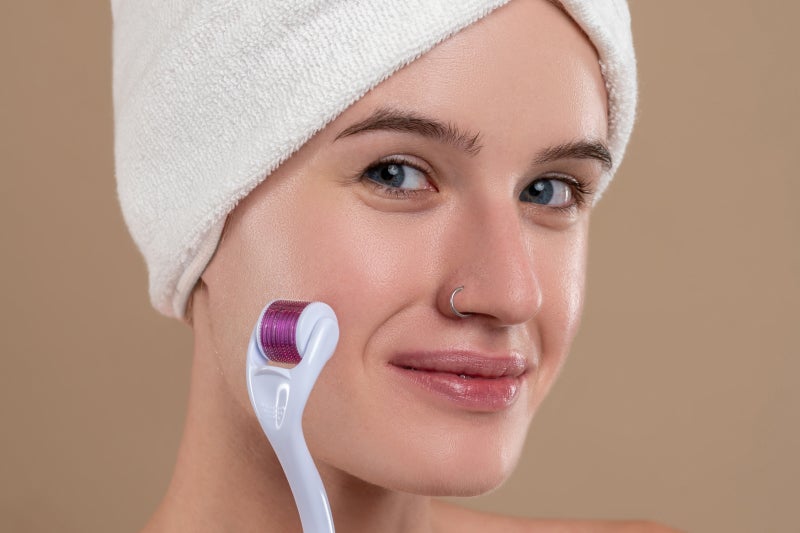
If you have acne scars or wrinkles that you’d like to make less visible, you may have considered dermarolling. Considered a type of microneedling, this skincare option may help improve your skin from the comfort of your home.
“It’s an exciting time for skin care, as we have a growing number of options that allow you to manage your skin,” says Dr. Heidi Harrington, a board-certified, fellowship-trained plastic surgeon at Beaufort Memorial Plastic Surgery & Aesthetics. “As with any other home-based treatment, dermarolling can be helpful, but it comes with certain risks.”
Here’s what you should know when choosing between dermarolling and professional microneedling for your skin’s health.
Read More: How and When Scar Revision Surgery Can Help You
Microneedling and Dermarolling Basics
Microneedling is a medical treatment performed by medical experts, such as a board-certified plastic surgeon. During the procedure, a specialist uses a pen-like device to repeatedly inject 9-36 fine needles into the facial skin at a 90-degree angle. Longer needles penetrate a deeper layer of skin, focusing on the second layer, the dermis. This is where collagen and elastin fibers are located. These needles create tiny injuries to the dermis, stimulating the formation of new collagen. Ultimately, the extra collagen growth tightens your skin and improves the skin's health.
Dermarolling, on the other hand, is not performed by professionals. You do it yourself at home. The technique uses a dermaroller, a special tool outfitted with rows of needles of the same length. As you roll the dermaroller across your face, the needles push into your skin, creating small wounds that encourage new growth. Some people also use dermarollers to help their skin better absorb skincare products, such as serums that contain growth factors or vitamins.
Uses of Microneedling and Dermarolling
“Microneedling and dermarolling are still fairly new offerings in skin care,” Dr. Harrington says. “As such, we’re still finding new uses of these approaches, and I suspect their uses will only continue to grow.”
Currently, some of the conditions that microneedling or dermarolling may help address include:
- Abdominal scars
- Acne scars, including boxcar scars
- Deep wrinkles
- Hair loss
- Stretch marks
If you experience any of these issues, a plastic surgeon can help you understand how microneedling, medical aesthetics or cosmetic surgery could refine your look.
Read More: Dermal Fillers: A Minimally Invasive Wrinkle Reducer
Safe Dermarolling Tips
Because you perform dermarolling at home instead of inside a medical facility, this DIY treatment comes with an increased risk of infection. You can reduce your risk by practicing dermaroller safety.
- Clean your face — Before every in-home treatment, wash your face with a pH-balanced cleanser. You should also wipe 70% isopropyl alcohol on your face if using needles that are longer than 0.5 mm. After treatment, rinse your face with clean water.
- Follow directions — Read the directions that come with your dermaroller and follow them exactly. Talk with a skin professional if you need help understanding the treatment process.
- Sanitize the equipment — “You put your skin at immediate risk if you insert dirty needles into it,” Dr. Harrington says. “Soaking a dermaroller in 70% isopropyl alcohol for 10 minutes before and after use disinfects the equipment, cutting down your risk of infection.”
- Time your treatment — If you’re experiencing active eczema or acne or have an open wound or other skin issue, do not use a dermaroller. You should inspect your face for any open sores/wounds, like acne, and avoid dermarolling until the skin is fully intact in order to prevent infection.
- Use even pressure — Applying uneven pressure or pushing the dermaroller too hard can tear your skin. If this happens, you may worsen acne scarring or cause other permanent damage.
Along with these tips, don’t hide your dermaroller use. Instead, stay in touch with your plastic surgeon, dermatologist or other healthcare provider before any problems arise.
“We can take action if your skincare routine causes problems, but it’s best not to wait that long,” Dr. Harrington says. “We can guide you toward an appropriate skincare routine and pinpoint what products to try out and which ones to avoid for long-lasting results.”
Read More: Otoplasty: Correcting Abnormal Ear Shape, Size or Placement
Dermarolling and Microneedling Results
Immediately after microneedling or dermarolling, you may experience short-term side effects. Some of these, according to the U.S. Food and Drug Administration, include:
- Bleeding
- Bruising
- Itching
- Peeling
- Redness
- Tightness
Fortunately, any side effects usually fade within a few weeks, no treatment needed. Within weeks, you should notice improvements in your skin. Maximizing your results, however, may require multiple treatments.
You can repeat microneedling about 3-8 weeks between sessions (based on your provider’s guidance), and you may need to wait a few weeks or longer after dermarolling. To ensure you don’t overuse or misuse your dermaroller, stay in touch with your healthcare provider.
“We see dermarollers as maintenance tools,” Dr. Harrington says. “When used properly, they provide a cost-effective way to make the most of microneedling and other treatment options.”
Dermarolling and Microneedling Quick Facts
Microneedling and dermarolling offer minimally invasive approaches to reduce acne scars, wrinkles and more. Understanding the uses of each helps you choose the right option for your skin.
- Microneedling and dermarolling work by creating small tears in the skin that stimulate the production of new collagen. This new growth plumps up the treated area, hiding scars, wrinkles and more.
- As a do-it-yourself treatment, dermarolling comes with increased infection risk. Certain steps, such as properly cleaning the equipment, reduce your risk.
- You should notice the results of your treatment within a few weeks. Repeated treatments can help produce the desired results.
Call 843-707-8020 or request a plastic surgery consultation online.
Featured Medical Expert
Heidi Harrington, M.D.
Plastic and Reconstructive Surgery
Accepting new patients
Related Providers

Heidi Harrington, M.D.
Plastic and Reconstructive Surgery
Accepting new patients
Beaufort Memorial Plastic Surgery & Aesthetics
122 Okatie Center Blvd. North
Suite 220, Okatie Medical Pavilion
•
Okatie,
SC
29909