Breast cancer is one of the most common cancers affecting women in the United States, with about 1 in 8 women developing invasive breast cancer during her lifetime.
Because breast cancer is so common, there’s no shortage of information (and misinformation) about it, especially with more individuals turning to online sources and social media with questions.
You may have heard that breast cancer only affects older women, that you are safe if the disease doesn’t run in your family, or that you only need to see a doctor if you find a lump in your breast.
Separating fact from fiction when it comes to breast cancer information is critical.
Understanding your personal risk, knowing the signs of the disease and following recommended screening guidelines can help you take an active role in your breast health.
Myth 1: If breast cancer doesn’t run in my family, I’m not at risk.
Fact: Most women who are diagnosed with breast cancer do not have a family history of it.
Having a family history of breast cancer can increase your risk, but not having a family history doesn’t mean that you are protected.
Only a small percentage of breast cancers are related to inherited genetic changes. The American Cancer Society estimates that about 5% to 10% of all cancers are directly caused by inherited gene changes, with approximately 1 in 10 cases being hereditary.
Inherited risk can come from either side of your family; genes such as BRCA1 and BRCA2 can be passed from either parent, and other inherited gene changes can also increase breast cancer risk.
“Breast cancer risk has also been associated with other genes, so be sure to provide your physician with a complete family history on all cancer diagnoses,” said Dr. Eric Turner, a board-certified and fellowship-trained medical oncologist who sees patients at Beaufort Memorial Oncology Specialists.
When discussing your family history with your doctor, mention breast, ovarian, pancreatic, prostate and other cancers diagnosed in close relatives on either side of your family.
If your history suggests an increased risk, ask your healthcare provider whether genetic counseling or a high-risk breast cancer assessment may be appropriate for you.
Read More: Genetic Testing for Cancer: Do You Need It?
Myth 2: Breast cancer only affects older women.
Fact: Breast cancer can occur at any age.
Breast cancer is more common in middle-aged and older women, but younger women can develop the disease, too. About 1 in 10 women diagnosed with the disease are younger than 45.
Your age is just one factor that impacts your risk of breast cancer. Family history, inherited gene changes, breast density, reproductive history, previous radiation treatment and other factors also play a role.
That’s why it is important to pay close attention to any changes in your breasts, no matter your age. A new lump, swelling, or skin or nipple change should be evaluated by a healthcare professional, even if you’re younger than the age when routine mammograms are generally recommended.
Read More: Take Control of Your Breast Cancer Risk Factors
Myth 3: If I don’t feel a lump, I don’t have breast cancer.
Fact: Breast cancer does not always cause a lump.
A new lump or mass in the breast is the most common symptom of the disease, but it’s not the only warning sign. Some breast cancers are detected on a screening mammogram before a person notices any symptoms.
Other possible symptoms include:
- Swelling of the entire breast or a part of the breast
- Skin dimpling or texture resembling an orange peel
- Red, dry, flaky or thickened breast or nipple skin
- Nipple retraction (turning inward)
- Irregular nipple discharge
- A change in breast size or shape
- Breast or nipple pain
- Swollen lymph nodes under the arm or near the collarbone
Many of these symptoms can have causes other than cancer, but any new or unusual changes in your breasts should be evaluated by a healthcare professional.
Myth 4: Mammograms can wait until I’m 50.
Fact: It’s recommended to begin routine mammography before the age of 50.
Screening recommendations can vary depending on whether you are at average or at increased risk.
The American College of Radiology and the American Society of Breast Surgeons recommends that women aged 40 and older receive annual screening mammograms.
Your personal screening schedule may be different if you have a higher-than-average risk of breast cancer. Talk with your doctor about when you should begin your screenings and whether you need additional imaging.
Read More: What to Expect During Your First Mammogram
Myth 5: A mammogram is only needed if I have symptoms.
Fact: Screening mammograms are designed to find breast cancer before symptoms appear.
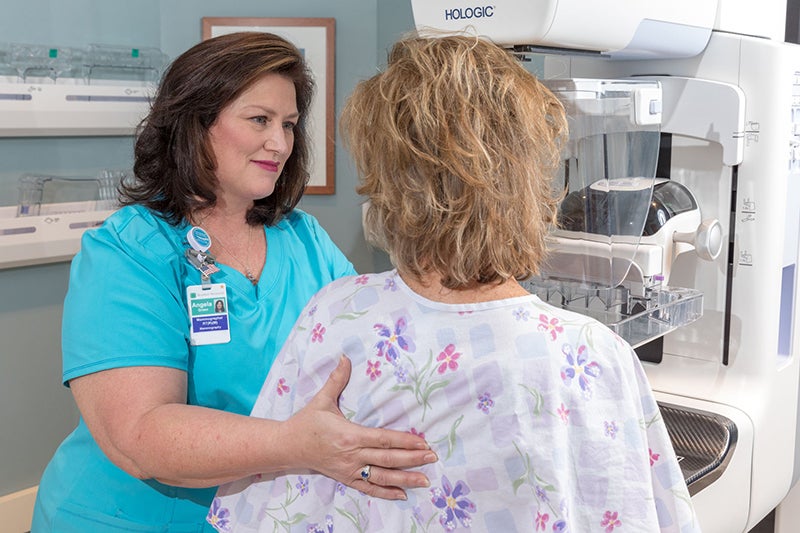
A screening mammogram is used to look for signs of breast cancer in women who do not have any symptoms. Mammography can detect some cancers when they’re small, before a lump can be felt.
“Finding breast cancer early can make treatment more successful,” adds Dr. Turner.
At Beaufort Memorial, breast imaging services include 3D mammography, breast ultrasound, MRI and image-guided breast biopsy. The Breast Health Centers also offer automated breast ultrasound screening (ABUS) for women who have dense breasts.
Myth 6: A breast self-exam is enough to screen for cancer.
Fact: Knowing how your breasts normally look and feel is important, but self-exams do not replace mammograms.
Screening mammography can find breast cancer before symptoms appear, while awareness of your breasts can help you recognize changes that need medical evaluation.
If you notice a new lump, nipple change, skin change, swelling or other unusual symptom, don’t wait for your next annual mammogram – contact your healthcare provider.
Myth 7: There’s nothing I can do to lower my breast cancer risk.
Fact: You can’t control every risk factor, but some lifestyle choices can help you lower your risk.
Some breast cancer risk factors – like age, genetics and family history – cannot be changed, but there are steps you can take to support your overall health and potentially reduce your risk for breast cancer.
- Limit alcohol. For women who drink alcohol, limiting intake to no more than one drink per day may help lower breast cancer risk.
- Maintain a healthy weight. Especially after menopause, excess body weight is associated with an increased risk of breast cancer.
- Stay physically active. Aim for at least 150 minutes of moderate-intensity activity or 75 minutes of vigorous activity each week.
- Don’t smoke. Avoiding tobacco benefits your overall health and reduces the risk of many cancers.
- Choose a healthy diet. Emphasize vegetables, fruits, whole grains, beans and other plant foods, while limiting processed foods and red meat.
Lifestyle changes alone cannot eliminate the risk of breast cancer, but they’re an important part of a healthy approach to cancer prevention.
Myth 8: If I have dense breasts, my mammogram is useless.
Fact: Dense breast tissue can make breast cancer more difficult to see on a mammogram, but mammography remains an important screening tool.
Breast density refers to the amount of fibrous and glandular tissue compared with fatty tissue in the breasts. Dense breasts can make some abnormalities harder to see on a mammogram.
Depending on your individual risk and breast density, your healthcare provider may recommend additional imaging such as ABUS as a supplement to mammography.
Read More: Breast Cancer Screening for Women With Dense Breasts
What Are the Biggest Risk Factors for Breast Cancer?
There is no single cause of breast cancer. Risk is influenced by a combination of factors, which include:
- Getting older
- Being female
- Having a personal history of breast cancer or certain breast conditions
- Having a strong family history of breast or other related cancers
- Inheriting gene changes, including BRCA1 and BRCA2
- Having dense breasts
- Certain reproductive and hormonal factors
- Previous radiation treatment to the chest
- Being overweight or obese, particularly after menopause
- Drinking alcohol
- Sedentary lifestyle
Having one or more risk factors doesn’t mean that you will develop breast cancer. Likewise, having few known risk factors doesn’t mean that you cannot develop it.
A conversation with your primary care provider, OBGYN or breast specialist can help you understand your individual risk and determine an appropriate screening plan.
Know the Facts about Breast Cancer
Breast cancer can affect women of all ages, so understanding your risk, recognizing warning signs and staying up-to-date with recommended mammograms are key to protecting your breast health.
- Breast cancer can affect anyone: Family history is only one risk factor, and breast cancer can occur at any age. Knowing your family history and recognizing potential symptoms are important.
- Lifestyle and screening matter: Maintaining a healthy weight, staying active, limiting alcohol, avoiding tobacco and eating a healthy diet may help reduce risk. For average-risk women, mammography is an important tool for early detection.
- Know your breasts and act early: Breast cancer doesn't always cause a lump. Changes such as skin dimpling, nipple changes, swelling or unusual discharge should be evaluated by a health care professional.
Due for a screening mammogram? Submit an appointment request or call 843-522-5015 to schedule your exam at our Breast Health Centers in Beaufort, Okatie or Hilton Head Island.
Featured Medical Expert

J. Eric Turner, M.D.
Medical Oncology +1 more
Accepting new patients
Related Providers

J. Eric Turner, M.D.
Medical Oncology +1 more
Accepting new patients
Beaufort Memorial Oncology Specialists
989 Ribaut Road
Suite 310, Beaufort Medical Plaza (Use front entrance)
•
Beaufort,
SC
29902