
Advanced Practice Providers: The Healthcare Professionals Expanding Access to Care
October 21, 2026Categories: Primary Care
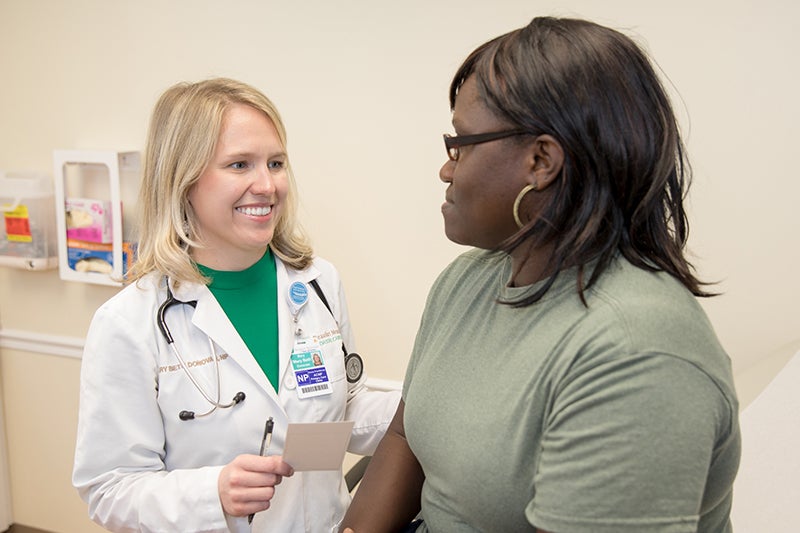
An advanced practice provider (APP) is a highly trained healthcare professional who provides many of the same services as a physician, including diagnosing illnesses, prescribing medications, ordering tests and managing chronic conditions.
The term APP most commonly refers to nurse practitioners (NPs) and physician assistants (PAs).
“At Beaufort Memorial, these skilled providers work collaboratively with physicians and other members of the healthcare team to deliver high-quality, evidence-based care,” says Dr. Kurt Gambla, Beaufort Memorial Chief Medical Officer. “These APPs continue to help improve access to both primary and specialty care throughout the Lowcountry.”
Can a Nurse Practitioner or Physician Assistant Be My Healthcare Provider?
Yes! Nurse practitioners and physician assistants are licensed and trained clinicians who can:
- Diagnose illnesses
- Order and interpret laboratory tests
- Order imaging studies
- Prescribe medications
- Treat injuries and common diseases
- Manage chronic conditions
- Provide preventive care
- Refer patients to specialists when necessary
For many routine and ongoing healthcare needs, patients can rely on care from an APP as part of a comprehensive – and collaborative – healthcare team.
Read More: Start Your Health Journey With Your Primary Care Provider
Why Advanced Practice Providers Are More Important Than Ever
The U.S. is facing a growing physician shortage, while the demand for healthcare services continues to increase.
The Association of American Medical Colleges (AAMC) reports that the U.S. could face a shortage of up to 86,000 physicians by 2036.
Population growth, increasing rates of chronic disease and an aging population are all contributing factors to the shortage.
“The impact is especially significant in communities that are growing rapidly like Lowcountry, where access to timely primary and specialty care remains essential,” Dr. Gambla says. “Beaufort Memorial has expanded – and continues to expand – its use of APPs to help meet growing healthcare needs in our communities.”
By integrating APPs into healthcare teams, health systems can:
- Increase appointment availability for patients
- Reduce patient wait times
- Improve access to preventive services
- Strengthen chronic disease management
- Allow physicians to focus on more medically complex cases
What’s the Difference Between a Nurse Practitioner and a Physician Assistant?
Patients are often curious about the difference between these two types of APPs. While PAs and NPs perform many of the same services, their educational pathways differ.
Nurse Practitioners (NPs)
Nurse practitioners begin their careers in nursing and complete advanced graduate education, typically earning a master’s or doctoral degree.
Their training emphasizes:
- Disease prevention
- Health promotion
- Patient education
- Long-term wellness management
Physician Assistants (PAs)
Physician assistants complete specialized PA graduate programs modeled after medical school education.
Their training focuses on:
- Diagnosis and treatment
- Disease management
- Clinical medicine
- Team-based physician collaboration
For patients, all APPs provide safe, high-quality, patient-centered care and work closely with physicians to ensure appropriate treatment.
Read More: How to Choose a Primary Care Provider
Are Advanced Practice Providers as Effective as Physicians?
Research consistently shows that APPs deliver skilled and compassionate care, achieving outcomes comparable to physician-led care for many healthcare services.
The American Association of Nurse Practitioners shares that decades of research demonstrates that NPs provide care that is safe, effective and evidence based. A recent review examined 117 systematic reviews representing more than 1,600 studies and found NP care was equal to or better than physician care across numerous quality measures.
Additional studies have found that:
- Patient satisfaction with a nurse practitioner is consistently high.
- Outcomes for many primary care conditions are comparable to physician-managed care.
- Team-based care models improve healthcare efficiency while maintaining quality and safety.
Conditions APPs Commonly Treat
An APP can often serve as your first point of contact for healthcare needs.
Common conditions treated by NPs and PAs include:
- High blood pressure (hypertension)
- Diabetes
- Asthma
- Seasonal allergies
- Respiratory infections
- Flu and COVID-19
- Ear infections
- Minor injuries
- Headaches and migraines
- Sleep concerns
- Preventive health screenings
- Women’s health concerns
- Chronic disease management
APPs can also coordinate specialty referrals when additional expertise is needed.
How Advanced Practice Providers Improve Healthcare Access
One of the greatest benefits of an APP is their ability to expand access to primary and specialty care services.
Patients can often secure appointments with an NP or PA more quickly than with a physician, allowing their health concerns to be addressed sooner. This improves patient convenience while helping healthcare systems operate more efficiently.
At Beaufort Memorial, APPs work throughout primary and specialty care practices, helping provide accessible, coordinated care close to home for Lowcountry residents.
Patients may encounter APPs in:
- Family medicine
- Internal medicine
- Women’s health
- Gastroenterology
- Orthopedics
- General surgery
- Vascular services
- Immediate and urgent care settings
This model helps ensure patients receive timely and convenient access to expert care while maintaining continuity throughout their healthcare journey.
Frequently Asked Questions About Advanced Practice Providers
Physicians and nurse practitioners are both highly trained healthcare providers.
For many preventive, routine and chronic care services, nurse practitioners provide care comparable to care received from physicians, and they work collaboratively with their physician colleagues when additional expertise is needed.
Yes. PAs and NPs are licensed to prescribe medications, order tests, diagnose illnesses and develop treatment plans.
APP means Advanced Practice Provider, a term commonly used to describe nurse practitioners and physician assistants.
APPs help address growing healthcare workforce shortages, improve access to care, reduce wait times and support team-based healthcare delivery.
The Future of Healthcare
Healthcare today is increasingly teamwork oriented. Physicians, nurse practitioners, physician assistants, nurses and specialists each bring unique expertise that strengthens patient care.
As communities continue to grow and healthcare needs become more complex, APPs will play an increasingly vital role in ensuring patients have access to the high-quality, personalized care they deserve.